How to verify AI output before you rely on it
Verifying AI output starts with sorting the task. Language claims can be checked against sources, calculations should be recomputed rather than re-read, and physical or temporal claims need everyday constraints applied. Rephrasing a question and comparing answers exposes instability, and the load-bearing claim deserves independent checking, not the whole text.
Key facts
- Framework source
- The three-task split follows the linguistic, mathematical and spatiotemporal reasoning lenses in The Reasoning Machine
- Method source
- The DEPTH method proposes five practices for reflection in AI-assisted work
- Practical scope
- This checklist covers verification before reliance, not evaluation of model quality
Sort the task before you check anything
Most bad verification advice treats all AI output the same. It is not the same. A wrong citation, a wrong sum and a wrong physical claim fail for different reasons and need different checks. Sort first.
Language claims: check against the source, not the text
When the output asserts something about the world — a date, a definition, a quote — the check is external. Find the source it names. If it names none, treat the claim as unverified regardless of how it reads.
A useful second pass: rephrase your question and ask again. If two phrasings of the same question produce different factual claims, at least one is unstable. Instability is a signal about the claim, not about your phrasing.
Calculations and logic: recompute, do not re-read
Reading a calculation carefully does not verify it. Recompute it. If the steps are shown, check the step where the result could plausibly break — a unit, a sign, an order of magnitude — rather than auditing every line with equal attention.
Asking the same model whether it is sure is not verification. Agreement with itself is not evidence.
Physical and temporal claims: apply everyday constraints
Some errors are visible without any source. Events out of order, quantities off by orders of magnitude, objects used in ways they cannot be used. These checks are cheap and catch a disproportionate share of confident nonsense.
The four-line checklist
Before you rely on any output:
- Can you name what would make this wrong?
- Have you checked the one claim the rest depends on?
- Does the answer survive a rephrased question?
- If being wrong is expensive, has something other than the model checked it?
What verification is not
Verification is not re-reading in the same frame you received the text. It is not a longer conversation with the same system. It is an independent check of the specific claim you are about to rely on — sized to the cost of being wrong.
The Reasoning Machine develops the three-lens view of reasoning failures in more depth. The Power of Slow Thinking turns the reflection habits into a method you can run on your own work.
Read a sample before choosing
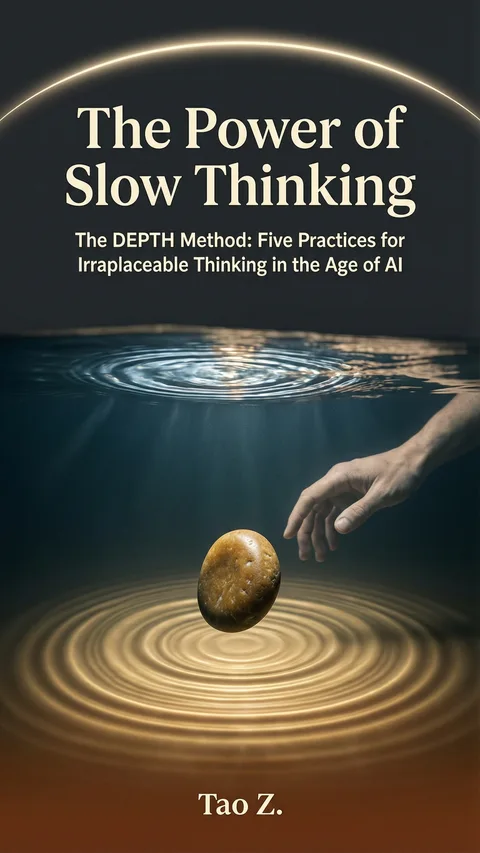
The Power of Slow Thinking
Reflection exercises for a more deliberate relationship with AI-assisted work.
Publisher-owned book. Sales support its author. Disclosure.
Sample, chapter outline and limitations →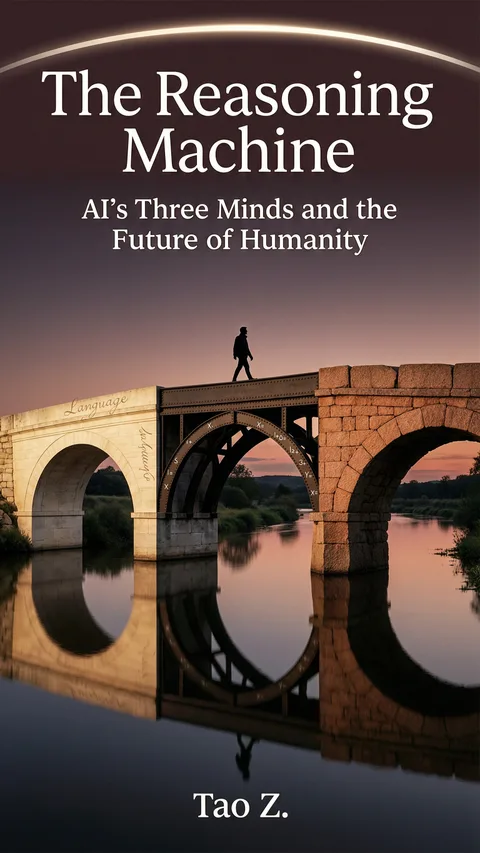
The Reasoning Machine
A three-lens framework for asking better questions about AI reasoning.
Publisher-owned book. Sales support its author. Disclosure.
Sample, chapter outline and limitations →
Your Brain and AI
Explore memory, embodiment and responsibility in a conceptual comparison of human and machine intelligence.
Publisher-owned book. Sales support its author. Disclosure.
Sample, chapter outline and limitations →Prepared with AI assistance. Updated 2026-10-28. About our recommendations.